


When I’m planning my next big trip—whether it’s a quick weekend in Hong Kong or a long-awaited tour around Japan—one question always pops up: is travel insurance worth the cost?
Honestly, I used to think of it as just an extra expense. I’d rather spend that money on an extra bowl of ramen or a cute souvenir, right? But after hearing so many horror stories from fellow travelers about lost bags in Europe or sudden flight cancellations during typhoon season in the Philippines, I realized it’s the most important thing I can pack.
Traveling has its risks. We can’t control the weather or when a stomach bug might hit, but we can protect our wallets. Let’s talk about why this “safety net” is actually a traveler’s best friend.
Travel insurance is like a safety net. It helps cover unexpected costs. With so many plans out there, it’s key to know what they offer to choose wisely.
Understanding Travel Insurance Fundamentals
Travel insurance can seem complex, but knowing the basics is key for travelers. As I dive into the world of travel insurance, it’s clear that understanding the fundamentals is vital. It helps us make smart choices.
What Exactly is Travel Insurance?
Think of travel insurance as a backup plan. It’s there to protect you from losing money when things don’t go according to plan before or during your trip.
If you have to cancel your flight because you got sick, or if you accidentally leave your camera in a taxi in Bangkok, your insurance is there to help cover those costs. It’s not just for “expensive” trips; it’s for anyone who doesn’t want to lose their hard-earned savings over a random accident.
Types of Travel Insurance Policies
There are many travel insurance policies to fit different needs. The main types include trip cancellation, medical, evacuation, baggage, and flight insurance. Each one offers unique benefits.
| Type of Insurance | Coverage | Benefit |
|---|---|---|
| Trip Cancellation | Covers trip cancellations due to unforeseen circumstances | Reimbursement for non-refundable trip costs |
| Medical | Covers medical expenses incurred during travel | Financial protection against medical bills |
| Evacuation | Covers emergency evacuations | Assistance with emergency transportation costs |
Who Should Consider Travel Insurance?
Travel insurance isn’t just for frequent or expensive travelers. It’s for anyone going on a trip, whether it’s close by or far away. It’s good for those with health issues, traveling during busy times, or doing adventurous activities.
Evaluating the Costs of Travel Insurance
Understanding the costs of travel insurance is key to making a smart choice. The price can change a lot based on several things. These include the policy type, where you’re going, how old you are, and how long you’ll be away.
Average Costs of Travel Insurance Policies
Standard policies that cover emergencies and trip cancellations usually cost 5-10% of your trip. For example, a $1,000 trip might cost $50 to $100 for insurance. But, the real cost can differ.
Factors Influencing Travel Insurance Pricing
Several things can affect how much travel insurance costs. These include:
- Destination: Going to places with high medical bills or high-risk areas can raise prices.
- Age of Travelers: Older travelers might pay more because they’re more likely to have health issues.
- Length of Trip: Longer trips are more expensive to insure because there’s a higher chance of problems.
- Type of Policy: Policies that cover more risks, like trip cancellations and lost baggage, cost more than basic ones.
To find the best deal, it’s important to compare travel insurance plans. Look at both the price and what’s covered.
Knowing the benefits of travel insurance is also vital. It might seem like an extra cost, but it can protect you from unexpected events that could spoil your trip.
The Big Benefits: Why You’ll Be Glad You Have It
Travel insurance offers a wide range of benefits. It helps protect you from unexpected travel risks. This way, you can avoid big financial losses.
Coverage for Trip Cancellations
Life happens! Sometimes work gets crazy, or a family emergency comes up. If you’ve already paid for your hotels and tours, insurance can help you get that money back if you have to cancel for a covered reason.
Key benefits of trip cancellation coverage include:
- Reimbursement for prepaid travel expenses
- Coverage for cancellations due to illness or injury
- Protection against travel advisories or natural disasters
Protection Against Medical Emergencies
This is the big one. Most of our local health cards don’t work once we leave the country. If you need a doctor while visiting the Grand Palace in Thailand or end up in a clinic in Seoul, travel insurance covers those bills so you don’t have to pay out of pocket.
Some key aspects of medical emergency coverage include:
- Coverage for hospital stays and medical treatments
- Emergency medical evacuations
- Repatriation of remains in the event of death
Assistance with Lost Baggage
There’s nothing worse than landing in Osaka only to find out your suitcase is still in Manila. Insurance can give you a daily allowance to buy essentials (like clothes and toiletries) while you wait for your bags to arrive.
The benefits of lost baggage coverage include:
- Reimbursement for essential items if baggage is delayed
- Coverage for lost or stolen baggage
- Assistance with replacing important documents
| Benefit | Description | Typical Coverage |
|---|---|---|
| Trip Cancellation | Reimbursement for prepaid expenses due to trip cancellation | Up to $10,000 |
| Medical Emergency | Coverage for medical expenses, including evacuations | Up to $50,000 or more |
| Lost Baggage | Reimbursement for lost, stolen, or damaged baggage | Up to $3,000 |
Common Myths About Travel Insurance
“I’m a budget traveler, I don’t need it.” Actually, budget travelers need it the most! If you’re traveling on a tight budget, a sudden ₱100,000 medical bill could totally ruin your finances. It’s better to avoid common travel overspending mistakes and invest in protection instead.
“My credit card already covers me.” Some cards do, but the coverage is often very limited. It’s always a good idea to double-check the limits before you rely on it. Often, they don’t cover enough for major medical evacuations.
Is It Just an Added Expense?
One big myth is that travel insurance is just extra money spent. But the truth is, it’s a small price to pay for the big risks it covers.
The average cost of travel insurance is around 5-10% of the total trip cost.
| Trip Cost | Average Insurance Cost |
|---|---|
| $1,000 | $50-$100 |
| $5,000 | $250-$500 |
Is Travel Insurance Only for Frequent Travelers?
Another myth is that only frequent travelers need insurance. But, whether you travel often or just once, it’s a smart choice.
- Trip cancellations: If you have to cancel your trip, insurance can help cover your losses.
- Medical emergencies: It can also help with medical bills if you get sick or hurt while away.
- Lost or stolen baggage: And, it can compensate you if your luggage is lost, stolen, or damaged.
By knowing the real benefits of travel insurance, you can make better choices. This ensures your trip is safe and enjoyable.
When Is Insurance Absolutely Essential?
Traveling internationally, doing adventure activities, or facing uncertain times? Travel insurance is key. It’s vital for certain situations.
International Travel Risks
Traveling abroad has its risks. You might face medical emergencies, trip cancellations, or lost luggage. International travel insurance helps by covering these risks. Medical costs outside the Philippines can be incredibly high.
Key risks associated with international travel include:
- Medical emergencies that require hospitalization or evacuation
- Trip cancellations or interruptions due to unforeseen circumstances
- Lost, stolen, or damaged luggage
- Travel delays or missed connections
Adventure Travel Considerations
If you’re hiking in the Himalayas or diving in Palawan, you need that extra layer of safety. Regular travel insurance might not cover these. So, you need extra coverage for adventure activities.
Considerations for adventure travel insurance include:
- Coverage for high-risk activities
- Emergency medical evacuations
- Equipment loss or damage
Traveling During Uncertain Times
With changing travel rules and unpredictable weather, having a plan B is just smart. During natural disasters, political unrest, or health crises, be extra careful. Travel insurance can protect you from trip cancellations or interruptions.
Key benefits of travel insurance during uncertain times:
- Trip cancellation or interruption coverage
- Coverage for travel-related expenses due to unforeseen events
- Assistance with repatriation if needed
In conclusion, travel insurance is more than a precaution. It’s essential for international travel, adventure activities, and uncertain times. Knowing the risks and having the right insurance makes your journey safer and more enjoyable.
Understanding Different Coverage Levels
Travel insurance comes in various levels of coverage. It’s key to pick the right one for your trip. Policies differ in what they cover, so choose wisely.
Basic vs. Comprehensive Coverage
Travel insurance plans range from basic to full coverage. Basic coverage offers little, like trip cancellations. On the other hand, comprehensive coverage includes more, like medical emergencies and lost baggage.
For short, safe trips, basic might be enough. But for longer, riskier trips, go for the full coverage.
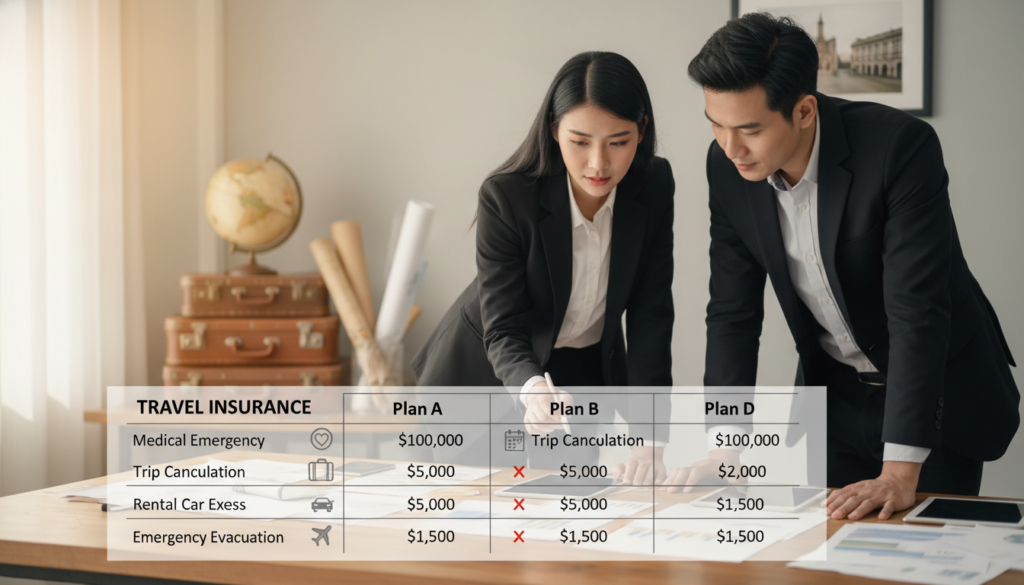
Understanding Policy Exclusions
Knowing what’s not covered is just as important. Common exclusions include pre-existing medical conditions and high-risk activities. Also, travel to areas with advisories might not be covered.
- Pre-existing medical conditions often need a waiver or a specific policy.
- Activities like skydiving or deep-sea diving might need extra coverage.
- Travel advisories can affect your coverage. Check if your destination is high-risk.
To get the most from your insurance, read the exclusions carefully. Consider extra coverage if needed.
How to Choose the Right Travel Insurance
Choosing the right travel insurance is a personal choice. It depends on your travel habits and comparing policies. When planning a trip, think about the risks you might face. Then, see how different policies can help protect you.
Evaluating Your Personal Needs
Start by looking at your travel plans. Are you going abroad or staying in the country? Are you into adventure or just relaxing? Your travel style affects the risks you face. For example, if you’re hiking or skiing, you might need extra accident coverage.
Think about these factors:
- Where and how you’re traveling
- How long you’ll be away
- The activities you’ll do
- Your health and age
Knowing these details helps you find the right insurance for you.
Comparing Insurance Providers
After figuring out what you need, compare insurance providers. Prices vary a lot, but coverage is key. Look at what’s covered, the deductible, and any things not included.
| Provider | Coverage Limit | Deductible | Cost |
|---|---|---|---|
| Allianz | $100,000 | $0 | $50 |
| AXA | $200,000 | $100 | $70 |
| Travelex | $150,000 | $0 | $60 |
Focus on what matters most to you. If you want to save money, consider a higher deductible. Also, check the provider’s reputation for handling claims.
By carefully looking at your needs and comparing providers, you can choose travel insurance that’s right for you. It should protect you without costing too much.
How to Book This Easily
I used to find insurance so confusing until I started using Klook. Most people know Klook for tours, but they actually offer great travel insurance options too!
When I’m booking my activities—like a pass for Universal Studios Japan or a day tour in Bali—I usually check Klook to compare insurance plans. It’s super convenient because you can manage your bookings and your protection all in one app. Plus, Klook often has “No-show Refund” or “Satisfaction Guarantee” add-ons that give you even more flexibility.
Pro Tip: If you’re a frequent traveler, look into annual plans. They can save you a lot of time and money compared to buying a new policy every time you fly.
The Claims Process Explained
Travel insurance claims can seem complex, but knowing the basics can make it easier. When you buy travel insurance, it’s important to understand how to file a claim. This is key in case you need to make a claim.
Steps to File a Claim
Filing a claim for travel insurance involves several steps. These steps are important to follow carefully for a successful claim. Here are the main steps:
- Notify your insurance provider as soon as possible after the incident.
- Gather all necessary documentation to support your claim.
- Fill out the claim form accurately and completely.
- Submit the claim form along with the supporting documentation.
Tips for Successful Claims
To boost your chances of a successful claim, it’s vital to know what makes a claim valid. Also, how to present your case well.
Key Tips:
- Keep detailed records of all incidents and related expenses.
- Understand your policy’s coverage and exclusions.
- Provide thorough documentation, including receipts and medical reports.
Here’s a summary of the claims process in a tabular format for easier reference:
| Step | Description |
|---|---|
| 1. Notification | Notify your insurance provider about the incident. |
| 2. Documentation | Gather necessary documents to support your claim. |
| 3. Claim Form | Fill out the claim form accurately and completely. |
| 4. Submission | Submit the claim form along with supporting documentation. |
Real-Life Scenarios: When Insurance Helped
Travel insurance is more than just a policy; it’s a safety net for travel’s unknowns. Many have seen the good it does firsthand.

Case Studies of Successful Claims
Travelers have found help in many situations. For example, someone had to cancel a trip for medical reasons. They got their money back thanks to insurance. This gave them financial help and peace of mind, knowing they were covered.
Another case was a traveler whose luggage was lost. Their insurance helped them get compensation and replace what they lost quickly.
Lessons Learned from Coverage Gaps
Not all claims are successful, and there are lessons in those cases. Some policies don’t cover all activities or pre-existing conditions. Knowing these gaps is key to getting the right coverage.
Travelers should learn from times when insurance didn’t cover something. This shows why it’s important to read policy details carefully. This way, they can avoid surprises.
In summary, real-life examples show travel insurance’s worth. It offers financial security and peace of mind. By understanding its benefits and limits, travelers can use their insurance wisely.
Should You Purchase Travel Insurance?
Travel insurance can be a smart choice for many travelers. It offers protection against unexpected events like trip cancellations, medical emergencies, and lost bags. This coverage can give you peace of mind and financial security.
Pros and Cons Analysis
Thinking about travel insurance? It’s key to look at your travel plans and the risks involved. If you’re going abroad, on an adventure, or during uncertain times, insurance is more important. But, you should also think about the cost and pick a policy that fits your needs.
Final Thoughts: Is It Worth It?
At the end of the day, travel insurance is about protecting your dream vacation. You’ve worked hard for this trip, so don’t let a “bahala na” attitude risk your savings.
If you’re still in the planning stages, check out my guide on how to spend 7 days in Tokyo or learn about average daily travel costs in Asia to help you budget for your next adventure—insurance included!