
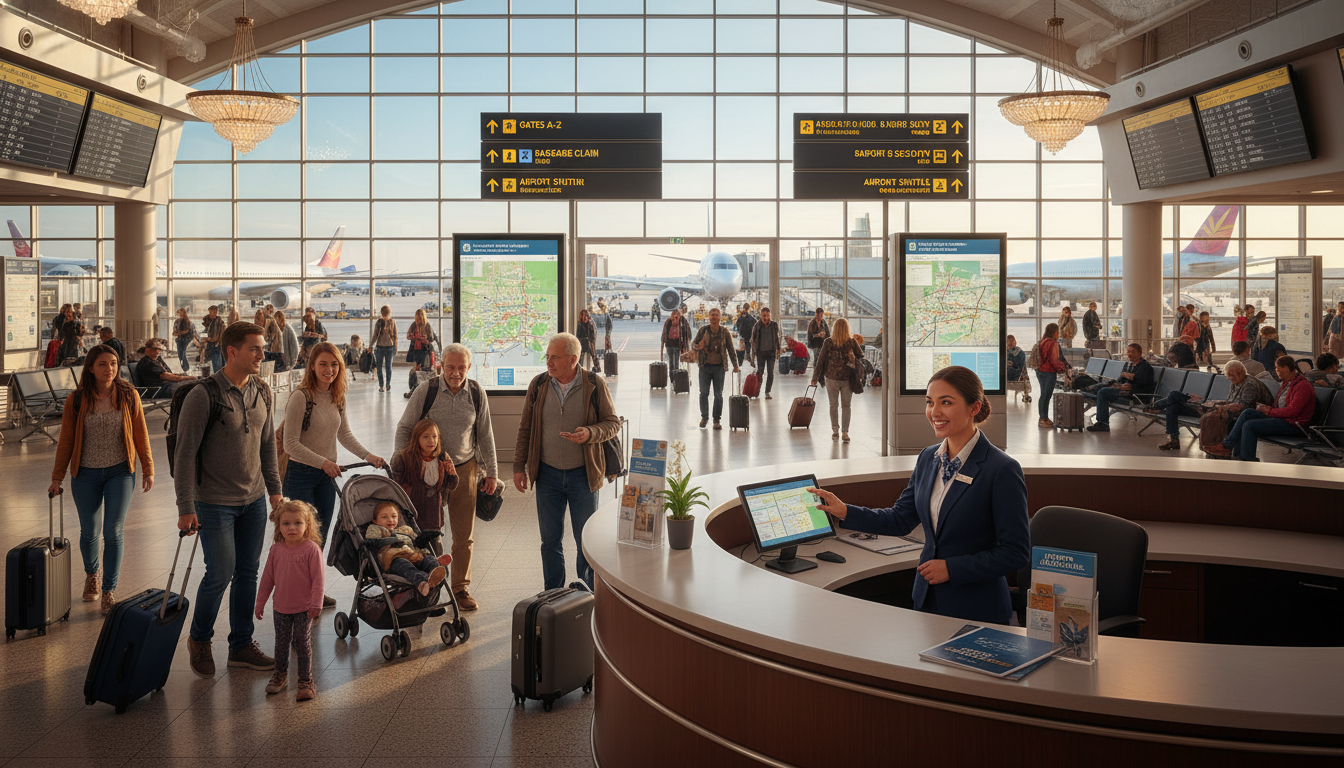
As I stepped into the airport for my first flight, I felt both excited and nervous. The huge terminal with its endless paths and busy people seemed like a maze.
My first flight taught me the importance of being prepared. Knowing the airport’s layout, the security rules, and the available services can make your trip smoother. In this article, we’ll share important airport travel tips for first-time flyers to move through airports with ease.
Key Takeaways
- Understand the airport layout to navigate efficiently
- Know the security protocols to save time
- Be aware of airport amenities for a comfortable journey
- Prepare for your flight to reduce stress
- Utilize exclusive travel offers for a better experience
Understanding Airport Layouts
Navigating an airport can be tough, even for first-timers. Knowing the airport layout is key for a smooth trip.
Airports come in all sizes, from small regional ones to huge international hubs.
Terminal Structure
The terminal is where you check-in, drop off luggage, and go through security.
Most airports have one or more terminals. Some have multiple concourses or wings.
Gates and Boarding Areas
Gates are where you board your flight.
Each gate has a number. You need your boarding pass to get in.
Amenities and Services
Airports have many amenities to make your trip better.
You can find restaurants, cafes, shops, lounges, and even movie theaters or game rooms.
| Amenity/Service | Description |
|---|---|
| Restaurants/Cafes | Variety of dining options from fast food to fine dining |
| Shops | Duty-free shopping, retail stores, and souvenir shops |
| Lounges | Comfortable waiting areas with complimentary food and drinks |
Preparing for Your Trip
Getting ready for your trip is key to a smooth journey. It’s not just about packing. You need to think about several important things that can make your trip better or worse.
Packing Essentials
Packing the right things is the first step to a stress-free trip. It’s important to pack light and smart. You should bring comfortable clothes, the electronics you need, and travel-sized toiletries.
- Check the weather forecast for your destination to pack appropriate clothing.
- Keep your electronics organized, including your phone, charger, and headphones.
- Pack a travel adapter if you’re flying internationally.
Travel Documents
Having the right travel documents is essential. You’ll need a valid passport, visa (if needed), and travel insurance documents. Making sure these are ready can save you from last-minute problems.
| Document | Description | Importance |
|---|---|---|
| Passport | Valid travel document | High |
| Visa | Required for certain countries | High |
| Travel Insurance | Covers unexpected medical or travel-related expenses | Medium |
Arriving On Time
Getting to the airport early is critical for a smooth trip. Aim to arrive 2 hours before domestic flights and 3 hours before international ones.
Being early lets you do everything without rushing. You can check in, drop off your bags, and go through security smoothly.
Check-In Process
Getting ready for my flight means understanding the check-in process. It’s a key step before boarding. Knowing it can make my travel smoother.
Online Check-In
Online check-in is super convenient. I can do it from home. Airlines let me check in 24 hours before my flight.
I just visit the airline’s website, enter my details, and follow the steps. I can print or download my boarding pass. This makes going through security easier.
Self-Service Kiosks
Self-service kiosks are another option. They let me check in and print my pass fast. I just scan my ID and follow the prompts.
These kiosks are quicker than traditional counters. They save me time.
Encountering Airline Staff
If I need help, I can go to the airline’s counter. There, staff can assist me. They can answer my questions and help with baggage.
It’s important to have my travel documents ready. This includes my passport and any visas. It makes the process smoother.
| Check-In Method | Benefits | Considerations |
|---|---|---|
| Online Check-In | Convenient, can be done from anywhere, 24-hour access | May require printing or downloading boarding pass |
| Self-Service Kiosks | Fast, reduces wait times, automated process | Limited assistance available, technical issues possible |
| Airline Check-In Counter | Personal assistance, can handle complex queries, baggage check-in | Longer wait times, requires travel documents |
Security Screening Tips
To make your airport experience less stressful, it helps to know what to expect at security. As a first-time flyer, understanding the security process can ease your anxiety.
What to Expect
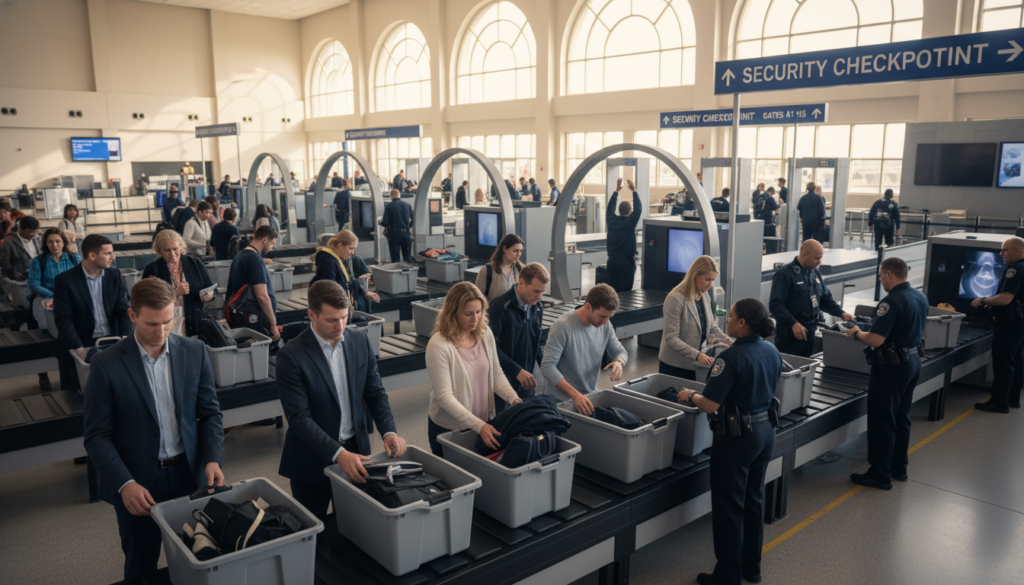
At the security checkpoint, you’ll find a few steps to follow. First, take off your shoes, belts, and electronic devices from your carry-on. Put them in bins for X-ray scanning. Also, remove your jacket or coat and place it in a bin.
You’ll need to pass through a metal detector or scanner. This is part of the security process.
Preparing for Security
To make security easier, wear shoes and clothes that are easy to remove. Consider using TSA Precheck or Global Entry for faster screening. Make sure your liquids, gels, and aerosols are in containers of 3.4 ounces or less. They should fit in a clear, quart-sized zip-top bag.
Common Prohibited Items
Knowing what you can’t bring in carry-on luggage is key. Items like sharp objects, firearms, and certain liquids or gels are banned. Always check with your airline for a full list of prohibited items before your flight.
Prohibited Items Checklist:
- Sharp objects (e.g., knives, scissors)
- Firearms and ammunition
- Liquids or gels in containers larger than 3.4 ounces
- Tools (e.g., pliers, screwdrivers)
| Item | Allowed in Carry-On | Allowed in Checked Luggage |
|---|---|---|
| Liquids/Gels/Aerosols > 3.4 oz | No | Yes |
| Sharp Objects | No | No |
| Firearms | No | Yes (with declaration) |
Navigating Through the Terminal
After clearing security, finding my gate is my next challenge. This can be tough, with so many terminals and concourses.
To make it easier, I need to understand the signs and directions. Most airports have clear signs for different amenities and services. Paying attention to these signs helps me navigate better.
Signs and Directions
Airport terminals have many signs to guide us. These include directions to gates, baggage claim, and places to eat and shop. Familiarizing myself with these signs makes navigating easier.
- Look for signs indicating gate numbers and departure boards.
- Use airport maps or apps to plan my route in advance.
- Ask airport staff for directions if I’m unsure.
Transportation Options
Many airports have ways to get between terminals or to remote areas. These include shuttle buses, trains, or moving walkways. Knowing these options can save time and energy.
- Check if my airport has a shuttle bus service between terminals.
- Look for train or monorail services that connect different parts of the airport.
- Use moving walkways to cover longer distances within the terminal.
Finding Your Gate
Finding my gate is the last step. I should check the departure boards for the latest gate info and plan my route.
- Check departure boards for gate information.
- Use airport apps or websites for real-time updates.
- Arrive at the gate with plenty of time to spare before boarding starts.
By following these tips, I can navigate the terminal easily. This makes my travel experience more enjoyable and stress-free.
Boarding the Aircraft
When boarding the aircraft, I should listen for my group to be called. I need to be ready to store my carry-on luggage well. Knowing the boarding process helps reduce any anxiety I might feel.
Listening for Announcements
Listening for announcements is key when boarding. The airline staff will call out boarding groups. It’s important to pay attention to these calls to not miss my turn.
I should also keep an eye out for any changes to the boarding schedule or gate information.
Boarding Groups
Airlines split passengers into boarding groups to manage the flow. Knowing my boarding group and when to board makes things smoother. I can check my boarding pass or the airline’s app to find out my group.
Carry-On Luggage
Storing carry-on luggage efficiently is important to avoid delays. I should be ready to put my bags in the overhead compartments or under the seat in front of me. Packing lightly helps avoid the need to gate-check my luggage.
By following these tips, I can have a stress-free boarding experience. As a first-time flyer, being prepared and informed is key to navigating the airport and boarding the aircraft with confidence.
In-Flight Experience
My flight experience is shaped by my seat choice, how I handle anxiety, and the entertainment I pick. Knowing these factors can make my trip better.
Seating Choices
Choosing the right seat is key for comfort. Airlines have different seats, from economy to first class, each with its own perks.
| Seat Type | Legroom | Recline | Priority Boarding |
|---|---|---|---|
| Economy | 30-32 inches | Yes | No |
| Economy Plus | 34-38 inches | Yes | Yes |
| First Class | 60-80 inches | Yes | Yes |
Think about legroom, recline, and boarding priority when picking a seat. It makes the flight better.
Managing Travel Anxiety
Flying can make some people anxious. There are ways to handle this, like:
- Breathing exercises
- Listening to calming music
- Using travel-friendly apps for relaxation
Using these methods can help me feel less stressed and enjoy the flight more.
Entertainment Options
In-flight entertainment is important. Airlines have movies, TV shows, music, and games to keep you entertained.
To enjoy these, I can bring my own headphones, download content, or use the airline’s streaming service.
By choosing wisely, managing anxiety, and using entertainment, I can improve my flight. I’ll arrive feeling good and relaxed.
Arrival at Your Destination
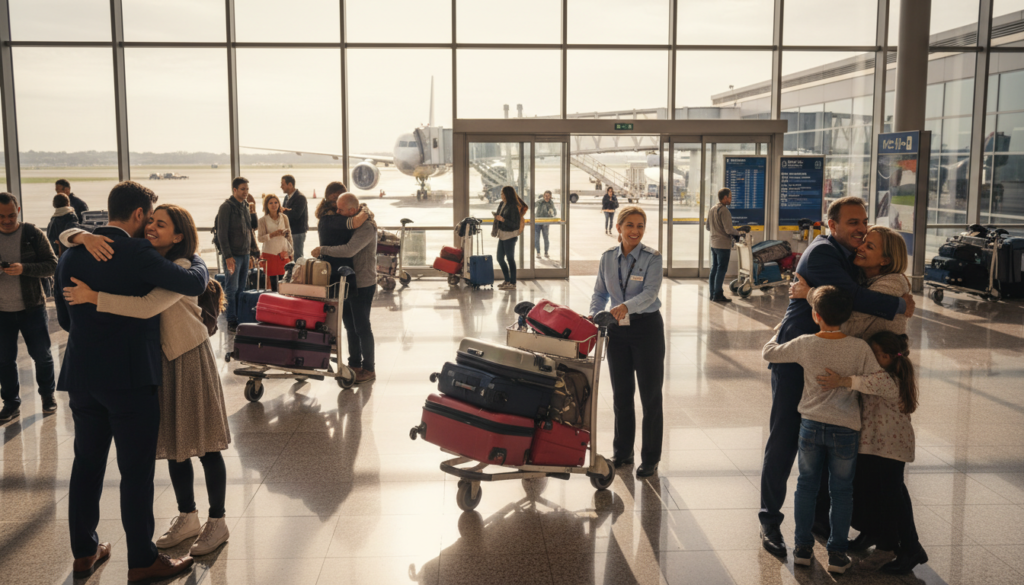
After getting off the plane, head to the baggage claim area. This is a key part of your journey. Being ready can make it easier.
Collecting Baggage
When you get to the baggage claim area, find the right carousel for your flight. Watch the screens for flight numbers and baggage claim info. Double-check your luggage tag to make sure it’s yours.
Tips for Collecting Baggage:
- Be ready to wait; baggage claim can take some time.
- Have your baggage claim ticket ready.
- Check your luggage for any damage.
Customs and Immigration
After getting your bags, go to the customs and immigration area. Have your travel documents ready, like your passport and any visas you need.
Preparing for Customs and Immigration:
- Fill out any forms you need before you go.
- Be truthful about what you’re bringing.
- Know the duty-free limits for your destination.
Ground Transportation
After clearing customs and immigration, it’s time to figure out how to get to your destination. You can take taxis, ride-sharing, public transport, or rent a car.
Tips for Ground Transportation:
- Look into your options before you go.
- Have the contact info for your chosen transport ready.
- Think about the cost and how long it’ll take to get where you’re going.
Dealing with Delays
Delays are a common part of air travel. Being ready for them can help you handle them better. Flight delays happen for many reasons. Knowing these can help you stay calm and manage your expectations.
Understanding Causes of Delays
Flight delays can be caused by weather, air traffic, mechanical issues, or security concerns. Weather conditions are a big reason, as they ensure flight safety. Air traffic control may also delay flights to manage traffic, mainly during busy times.
What to Do in Case of a Delay
If your flight is delayed, first check with the airline for the reason and how long it will last. Airlines usually update through apps or at the gate. Knowing your rights as a passenger is also important. You might be eligible for compensation or amenities like food and lodging, based on the airline’s policies and the delay’s length.
- Check the airline’s app or website for updates.
- Visit the gate or a customer service desk for information.
- Understand your passenger rights for possible compensation.
Keeping Calm and Patient
Dealing with a delay can be tough, but staying calm helps. Use the time to explore the airport, enjoy amenities, or get work done. Being informed and having a plan can greatly reduce stress from flight delays.
Being prepared and knowing why delays happen can help you deal with them. Staying calm and making the most of the delay can make a bad experience better.
Traveling with Children
Traveling with kids can be tough, but it can also be a great adventure. Whether you’re flying with a toddler or a teenager, there are ways to make it fun for everyone. Here are some tips and tricks to help you out.
Preparing Kids for Flying
Before you fly, get your kids ready for the trip. Tell them about flying, from checking in to boarding, and what happens on the plane. Use videos or books to help them understand. Let them know it’s okay to feel scared and that you’re there to help.
It’s important to explain the security checks to your kids. Tell them they’ll have to take off their shoes, belts, and electronics. Let them know it’s a normal part of flying.
Keeping Them Entertained
Keeping kids happy during the flight is key. Bring lots of toys, games, and entertainment. This can include coloring books, puzzles, and tablets with their favorite shows or games. A portable DVD player or handheld console can also be a good idea.
Don’t forget snacks and drinks to keep them happy. Try to avoid sugary snacks, as they can make them restless.
Tips for Smooth Travel
Book a flight that fits your child’s sleep schedule. If they’re a morning person, book a morning flight. Consider booking a flight with more legroom or upgrading to a higher class of service.
Make sure you have all important documents ready. Pack a small bag with essentials like diapers, wipes, and a change of clothes.
By being prepared and following these tips, you can make traveling with your kids smooth and fun. Stay calm, patient, and flexible. This will help make flying a positive experience for your family.
Accessibility Considerations
Airports work hard to make sure everyone has a good travel experience. They have many services and facilities for this. Knowing about these can make your trip better.
Services for Passengers with Disabilities
Airports have many services for people with disabilities. These include wheelchair help, accessible bathrooms, and special check-in areas. They aim to make sure everyone can move around easily.
- Wheelchair Assistance: Staff trained to help with mobility issues are ready to assist. They help with getting around the airport and boarding flights.
- Accessible Restrooms: Airports have restrooms that are easy to use. They have grab bars, lowered sinks, and emergency alarms.
- Special Check-in: There are special check-in areas for passengers with disabilities. They make the process smoother and more comfortable.
Planning Ahead for Accessibility
Planning is key for a smooth trip, even more so for those with disabilities. Here are some tips:
- Notify Your Airline: Tell your airline about your needs when you book. This ensures they can help you.
- Research Airport Facilities: Learn about the airport’s accessible features. Know where to find restrooms and wheelchair charging points.
- Arrive Early: Getting there early helps you get through the airport without stress. You can do everything you need to do calmly.
Communicating Needs to Airlines
Talking to your airline about your needs is important. Here’s how to do it:
- Contact Customer Service: Talk to the airline’s customer service about your needs.
- Use Online Forms: Airlines often have online forms for special requests.
- Arrive Prepared: Bring any documents or equipment you need for your accessibility.
By knowing what services are available and planning ahead, people with disabilities can have a better travel experience.
First-Time Flyer Mistakes to Avoid
Traveling by air for the first time can be overwhelming. Knowing what to avoid can make your trip better. It helps you have a smoother journey.
Pitfalls to Watch Out For
One big mistake is showing up too late for your flight. Not knowing the airport’s layout is another. Learning airport tips can save you time and stress.
Lessons from Experienced Travelers
Seasoned travelers share tips to help new flyers. For example, checking in online and getting your boarding pass early can speed up your airport time.
Preparing for Future Flights
For a better next flight, look into travel services. Klook offers products and services to improve your travel. Their Klook affiliate promotion can help you find new travel conveniences.
By knowing first-time flyer advice and preparing, you’ll enjoy a stress-free flight.