
Feeling anxious before flying is more common than many travelers admit. Sometimes it starts days before the trip. Sometimes it shows up at the airport, during boarding, or when the plane takes off.
I do not think travel anxiety means you are not brave enough to travel. It usually means your mind and body are trying to protect you from uncertainty. The goal is not to force yourself to feel perfectly calm. The goal is to prepare in a way that helps you feel more supported and less overwhelmed.
Important note: This article is for general travel planning and self-care only. It is not medical advice. If anxiety feels severe, causes panic attacks, affects your daily life, or makes flying feel impossible, consider speaking with a qualified mental health professional or doctor.
Quick Flight Anxiety Checklist
| Before the trip | Organize documents, choose seats early, plan transport, and reduce last-minute decisions. |
| At the airport | Arrive early, eat something light, hydrate, and give yourself buffer time. |
| During anxiety | Use slow breathing, grounding, music, journaling, or a calming distraction. |
| Helpful support | Travel companion, airline staff, trusted resources, doctor or therapist if needed. |
| Main goal | Make flying feel more manageable, not perfect. |
Why Flying Can Trigger Anxiety
Flying can trigger anxiety because it combines many stressors at once: time pressure, security checks, crowds, lack of control, unfamiliar sounds, turbulence, and being in a confined space.
Even if you know logically that flying is routine, your body may still react with a racing heart, tense muscles, shallow breathing, or worried thoughts. That reaction can feel uncomfortable, but it does not mean something bad is happening.
Start With Better Pre-Flight Planning
The calmer flight often starts before you reach the airport. When your plans are organized, your brain has fewer things to panic about.
- Check your flight time, terminal, and baggage rules the day before.
- Save your boarding pass and hotel details in your phone.
- Pack liquids, chargers, medicine, and documents where you can reach them.
- Choose your seat early if seat location affects your anxiety.
- Plan airport transportation with extra buffer time.
- Prepare one simple airport outfit that feels comfortable.
If planning itself feels stressful, my step-by-step trip planning guide can help you organize the basics in a calmer order.
Arrive Early, But Not Too Early
Rushing can make anxiety worse. Arriving with enough time helps you move through check-in and security without feeling like every minute is an emergency.
At the same time, arriving too early can give your mind too much time to spiral. Choose a realistic buffer based on the airport, airline, and whether you are checking bags.
Use Breathing and Grounding Techniques
Relaxation techniques can help your body shift out of a stress response. Mayo Clinic notes that relaxation techniques may help slow breathing and focus attention, which can be useful when stress symptoms show up.
Try this simple grounding exercise:
- Name 5 things you can see.
- Name 4 things you can feel.
- Name 3 things you can hear.
- Name 2 things you can smell.
- Name 1 thing you can taste.
You can also try slow breathing: inhale gently, exhale longer than you inhale, and repeat for a few minutes. Do not force your breath. Keep it gentle.
Prepare a Calm Flight Kit
A small flight kit can make the experience feel more familiar and less stressful. Pack items that help your body feel safe and comfortable.
- Noise-canceling headphones or earplugs
- Comfortable scarf or light jacket
- Water bottle after security
- Simple snack
- Gum or mints
- Downloaded music, podcasts, or shows
- Travel journal or notes app
- Any prescribed medication or personal care items you normally use
If journaling helps you process nervous thoughts, my travel journal tips guide has simple prompts you can use before or after a flight.
Choose Distractions That Actually Help
Distraction can help, but choose something gentle. If your anxiety is already high, complicated tasks may feel frustrating. Try something familiar and easy.
- A comfort playlist
- A light movie or series
- A podcast with a calm host
- A simple mobile game
- A book you do not need to concentrate on too hard
- A notes app list of things you are excited to do after landing
Make Turbulence Less Scary
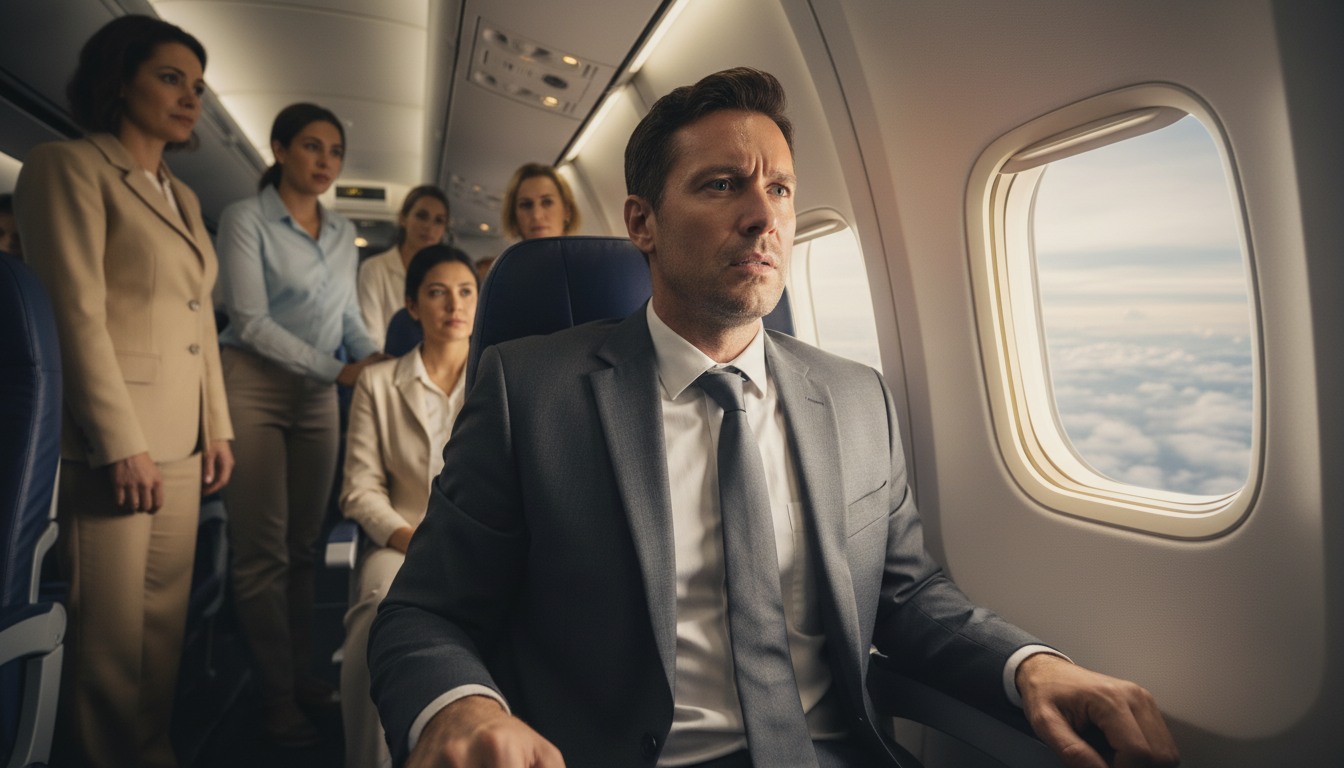
Turbulence can feel alarming, but it is a normal part of flying. It may help to think of it like bumps in the road: uncomfortable, but not automatically dangerous.
If turbulence makes you anxious, keep your seatbelt fastened while seated, relax your shoulders, and focus on one calming action at a time. You can breathe slowly, listen to music, or look at the flight attendants’ calm behavior as a cue that the situation is routine.
Tell Your Travel Companion What Helps
If you are traveling with someone, tell them before the flight what support helps you. This avoids confusion when anxiety shows up.
You might say:
- “If I get quiet, please remind me to breathe slowly.â€
- “Can you distract me during takeoff?â€
- “Please do not joke about turbulence.â€
- “I may need reassurance, but I do not need a long explanation.â€
Reduce Anxiety With Better Travel Self-Care
Flight anxiety can feel stronger when you are hungry, dehydrated, underslept, or overloaded. Take care of the basics before expecting your mind to calm down.
- Eat something light before the flight.
- Drink water.
- Avoid too much caffeine if it makes you jittery.
- Sleep as well as you can the night before.
- Give yourself recovery time after landing.
For more support, read my travel self-care tips.
Helpful Trusted Resources
These are not affiliate links, but they are useful if you want more information about travel stress, mental health, and relaxation techniques:
- CDC Mental Health and Travel – guidance on travel-related stress and mental health preparation.
- Mayo Clinic relaxation techniques – practical relaxation methods for stress management.
- National Institute of Mental Health anxiety information – general information about anxiety disorders and when to seek help.
Philippines-Based Support Resources for Filipino Travelers
Since Incubhabe is written from a Filipina travel blogger perspective, it is also helpful to include Philippines-based resources alongside the global resources above. These are not affiliate links. If you are in distress or need mental health support, check current official details before calling or messaging because hotline availability can change.
- Department of Health Mental Health Program – official DOH information about mental health programs in the Philippines.
- National Center for Mental Health – Philippines-based mental health institution and support resource.
- Philippine Information Agency update on DOH/NCMH crisis hotlines – useful for checking recently published hotline information.
When to Get Extra Help
If fear of flying causes panic attacks, makes you cancel important trips, or feels unmanageable, it may be time to get extra support. A doctor, therapist, or mental health professional can help you explore strategies that fit your situation.
You do not have to wait until things feel extreme. Getting support can be part of responsible travel planning.
A Few Booking Shortcuts, If You Need Them
You do not need to prebook everything. These are worth comparing only when they solve a real planning problem: Compare travel eSIM options if reliable mobile data would make the trip easier; Check airport-transfer choices when a direct arrival ride solves a luggage or timing problem; Browse tours and activities for an experience that benefits from a reserved ticket, transport, or guide. Compare the inclusions, meeting point, and cancellation terms before paying.
Keep Your Trip Plans in One Place
If you are still organizing your itinerary, budget, and accommodation notes, download my free Budget Travel Guide. It can help you compare options, track expenses, and avoid overpacking your schedule.
If you prefer writing things down, my paperback travel planner on Amazon has sections for transportation, accommodation, itinerary planning, packing lists, and daily notes.
Related Travel Planning Posts
- Effortless Trip Planning: A Step-by-Step Guide
- Airport Tips for First-Time Flyers
- Travel Self-Care Tips
- Travel Journal Tips
- Solo Travel Confidence
FAQ About Travel Anxiety Before Flying
Is it normal to feel anxious before flying?
Yes. Many travelers feel nervous before a flight, especially if they dislike uncertainty, crowds, turbulence, or not feeling in control.
What can I do the night before a flight?
Pack your documents, check your airport timing, choose comfortable clothes, charge your devices, prepare snacks, and avoid leaving important decisions until the morning.
How can I calm myself during takeoff?
Use slow breathing, listen to calming audio, focus on one object, hold something comforting, or ask your travel companion to talk to you during takeoff.
Does turbulence mean the flight is unsafe?
Turbulence is common and usually part of normal flying. It can feel uncomfortable, but it does not automatically mean the flight is unsafe.
When should I talk to a professional about flight anxiety?
If anxiety feels severe, causes panic attacks, makes you avoid travel, or affects your daily life, consider speaking with a qualified mental health professional or doctor.
Final Thoughts
Travel anxiety before flying can feel frustrating, but it does not mean you cannot travel. With preparation, support, and calming tools, the experience can become more manageable.
Start small: organize your airport day, pack comfort items, practice one breathing technique, and give yourself enough time. You do not need to feel fearless to take the flight. You just need a plan that helps you move through it with more care.
A Calmer Flight Prep Routine
Prepare the parts you can control: documents, baggage, airport route, check-in time, medicines, snacks, and comfort items. Anxiety often grows when small details stay scattered.
Give yourself extra time at the airport. A slower arrival, a clear folder, and a simple plan can make the first flight feel more manageable.
Read Next
Final Planning Note
I would use this guide as a starting point, then check the exact date, weather, route, and group needs before paying for anything. A good plan should make the trip easier, not pressure you into booking every option.
If the schedule already feels full, choose one paid activity and keep the rest of the day lighter. That gives you room for meals, photos, delays, and the small travel moments that often become the best memories.